admin
Administrators
-
Joined
-
Last visited
-
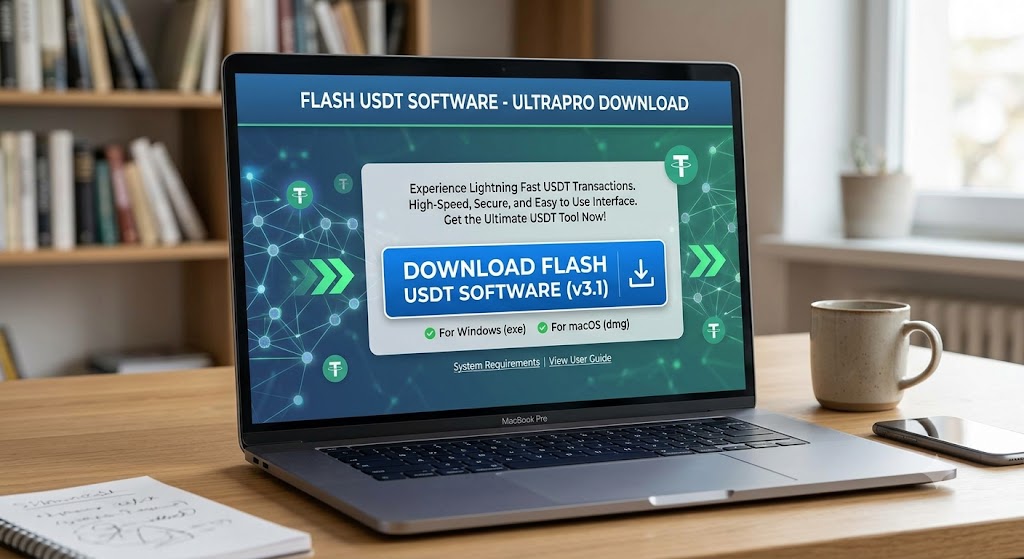
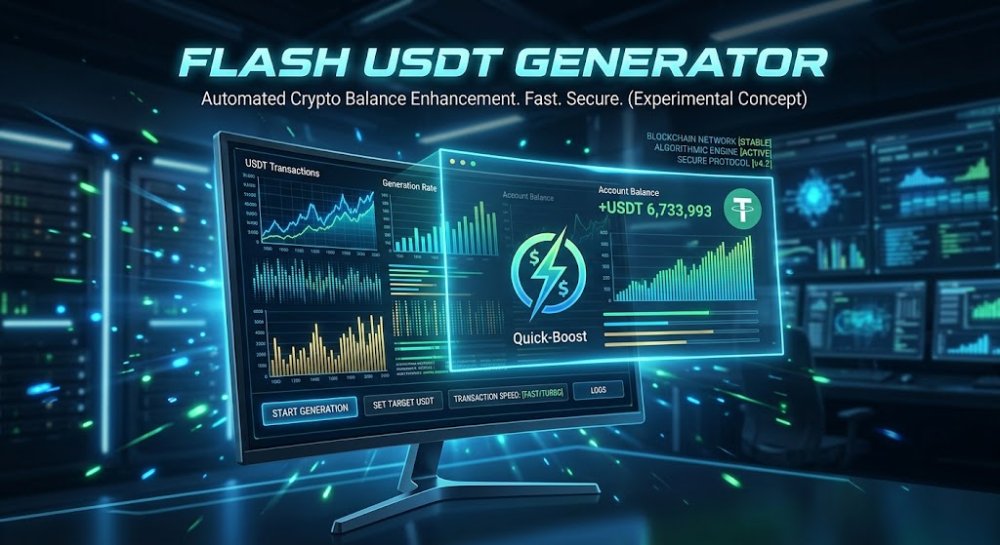
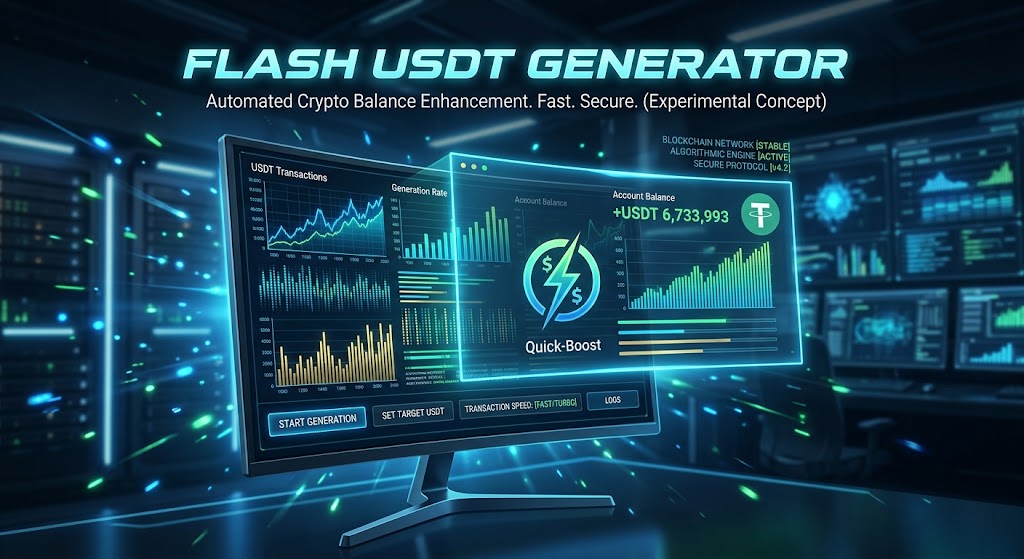
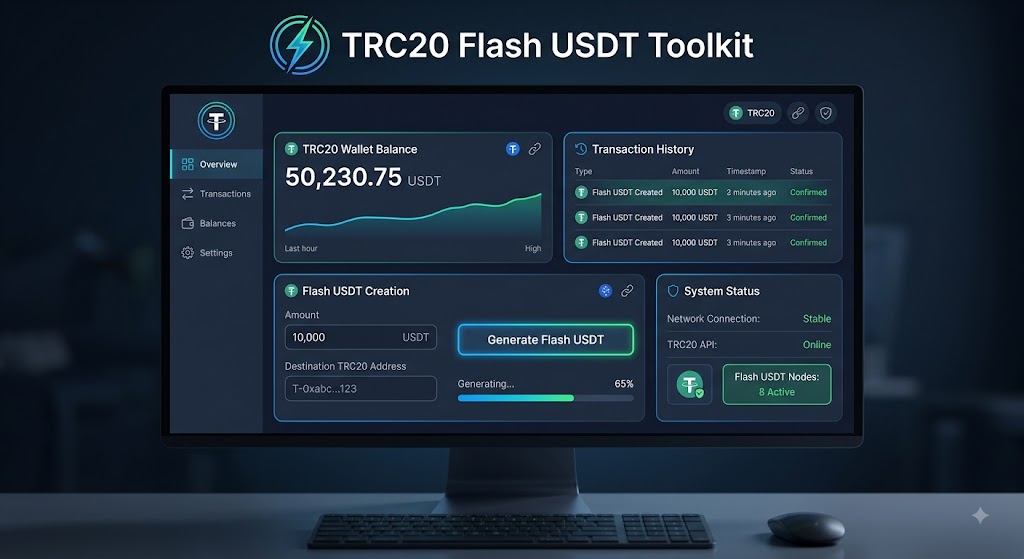
Flash USDT generator software | Real Fake USDT Sender Software, Fake USDT Transaction Tool, Fake Tether Sender Software | Flash USDT Sender Tool | How To Send Fake USDT Transaction | Fake USDT Generator Software | Send Fake USDT To Family | USDT Flash Sender App | Tether Fake Sender Tool Flash USDT" software can send fake USDT tokens that appear briefly in a wallet before disappearing, or generate valid USDT across wallets. Flash USDT Software is a programs that does the following : Generate free USDT Send instant USDT to wallets Create spendable crypto without buying Flash USDT Generator Software" is a term used to describe a type of software—often touted as a tool for "simulating" or "testing"—that creates fake, temporary USDT (Tether) tokens that appear in a wallet but disappear after a short time. Contact +447577350128 for more info These tokens often show as valid and transferable on blockchains like Tron (TRC20) or Ethereum (ERC20) temporarily, but they are not backed by real assets and are rejected by blockchain nodes, typically disappearing within 180 days. Features of Flash USDT Generator Software Cross-Device Compatibility: Seamless exploration of the web, mobile, and desktop. USDT Flashing Software is compatible with major wallets and exchanges, such as Binance, Trust Wallet, MetaMask, and Coinbase Wallet. This flexibility ensures that you can use the flashed USDT across platforms without limitations. It has the capability of flashing more than $500,000 daily Applications of Flash USDT Software USDT Flash Software is incredibly versatile, making it suitable for a wide range of crypto activities: Staking: Secure staking opportunities quickly by using flash USDT to join staking pools instantly. Online Purchases: Use flash USDT to make purchases on e-commerce sites that accept cryptocurrency, ensuring fast and easy transactions. Casino Gaming and Betting: Deposit flash USDT on casino and betting platforms for instant gameplay, without waiting. P2P Transfers: Send flash USDT between wallets, supporting fast, secure peer-to-peer transactions. Trading: For traders, USDT Flash Software provides immediate liquidity, so you can act on market changes quickly. Flash Loans and DeFi Lending: Participate in flash loans and other DeFi lending programs with instant access to USDT, meeting short-term liquidity needs.
-
Cryptocurrency like Bitcoin (BTC), Ethereum (ETH), and Tether (USDT) continues to grow rapidly, with digital networking services such as TRC20, ERC20, BEP20 and Binance becoming widely used for payments, trading, and investment. As the crypto industry expands, various software tools have also emerged, including programs known as Flash USDT Generator Software or Flash USDT Sender App Tool. Contact Admin - +447577350128 Latest Fake USDT Sender Software | Flash USDT Sending App Tool | Real Fake USDT Sender Software | Fake USDT Transaction Tool | Fake Tether Sender Software | Flash USDT Sender Tool | How To Send Fake USDT Transaction | Fake USDT Generator Software | Send Fake USDT To Family | USDT Flash Sender App | Tether Fake Sender Tool Flash BTC, USDT and ETH Transaction Generator Software Explained The Fake USDT Sender Software is now available. We provide a live test, you connect to my pc through Anydesk and watch how the software works before purchasing it. Flash BTC, USDT, and ETH transaction generator software is commonly described as a tool that generates cryptocurrency transactions. These programs generate digital transactions that appear similar to real blockchain transfers. However, it is important to understand how these tools work and their limitations. What is Flash Crypto Transaction Generator Software? Flash crypto generator software is a type of programme that generates cryptocurrency transactions rather than creating real blockchain transfers. The generated transaction appear in wallet interfaces temporarily. These Flash coins display similar characteristics to real cryptocurrency, such as: • Transaction display in wallet interfaces • Temporary balance reflection • Transaction ID appearance • Wallet address interaction Fake BTC Sender Software – Live Demo Available The Fake BTC Sender Software is now available! Here’s how it works: 1. Live Demo: Connect to my PC via Anydesk to see the software in action before you buy. 2. Easy Purchase: Once you purchase, you’ll receive a zip file containing the software. 3. Step-by-Step Guide: The zip file includes a PDF tutorial that shows you how to use the software. Why Choose This Software? • Test it live before buying. • Easy to follow instructions. • Get started immediately after purchase. How to Get Started: 1. Whatsapp Admin: +447577350128 2. Schedule your live demo via Anydesk. 3. Complete the purchase and download the software. USDT TRC20 ERC20 BEP20 USDT FLASH SENDER SOFTWARE FAKE USDT SENDER SOFTWARE FLASH TETHER SENDING APP FAKE USDT SENDER APP FAKE CRYPTO SENDER SOFTWARE FLASH TRC20 ERC20 BEP20 APP FAKE USDT SENDER SOFTWARE
-
Flash USDT Generator Software (also called Fake USDT Sender, USDT Flasher, or Flash USDT Tool) is widely marketed online as a program that "generates" or "sends" large amounts of USDT (Tether) to any wallet. It supposedly makes the balance appear real for a limited time (e.g., 30–180 days) before disappearing, with claims of support for networks like TRC20, ERC20, or BEP20, instant low-fee transfers, and even visible confirmations on block explorers Contact info - +447577350128 flash USDT generator, flash USDT sender software, fake USDT sender, DT flash tool download, flash USDT TRC20, fake USDT generator software, USDT flasher app", flash USDT online sender, real fake USDT sender software, USDT flashing software, flash BTC and USDT generator, free USDT flasher tool, USDT transaction simulator", how to send flash USDT, flash USDT 2026, USDT flash tool / flash USDT sender software, flash USDT TRC20 / ERC20 generator, fake USDT generator app / software 2026, send flash USDT to any wallet, USDT flasher / flash USDT online sender, free flash USDT demo / unlimited USDT transfer tool, flash BTC and USDT Generator. In reality, these tools create real, spendable, or permanent USDT. Features of Flash USDT Generator SoftwareInstant Transfers & Confirmations — Lightning-fast "transactions" that appear immediately in the recipient's wallet with realistic confirmations and transaction hashes (TxID). No waiting for blockchain confirmations. High Daily Limits — Ability to "send" or generate large amounts, often advertised as $50,000 to $500,000 per day (some extreme claims go up to $50 million). Customizable amounts per transfer. Network Compatibility — Supports major USDT networks including TRC20 (Tron), ERC20 (Ethereum), BEP20 (BSC), and sometimes others like Solana. Works across different blockchains. Temporary Duration — The "flashed" USDT typically remains visible in the wallet for a set period (e.g., 30–180 days or customizable timeframe) before disappearing automatically. Transferable & Tradable Simulation — The fake balance can be "transferred" between wallets, split, swapped, or even shown as tradable on some platforms/P2P interfaces for demo purposes. Universal Wallet Support — Compatible with all major wallets (Trust Wallet, MetaMask, Binance, Phantom, etc.) on both mobile and PC versions. User-Friendly Interface — Simple dashboard for entering wallet addresses, amounts, and parameters. Often described as intuitive with live demos. Low/No Fees & Anonymity — Claims of near-zero or very low transaction fees, plus 100% anonymity and secure processing. Realistic Appearance — The flashed USDT looks identical to real Tether (same logo, symbol, 1:1 value display). It may appear in balance, transaction history, and even some explorers temporarily. Additional "Advanced" Options — Real-time tracking/logs, REST API for recent transfers, customizable visibility duration, daily thresholds, and "P2P platform support" for betting, casinos, trading demos, or business presentations. Cross-Device & Regular Updates — Available as desktop software, web tool, or app with ongoing "contract" updates to evade detection. Some legitimate simulation tools (for developers) exist on GitHub that mimic these for testing only — they simulate transfers on local/testnet environments, support customizable amounts/addresses, and ensure no real funds are involved.
-
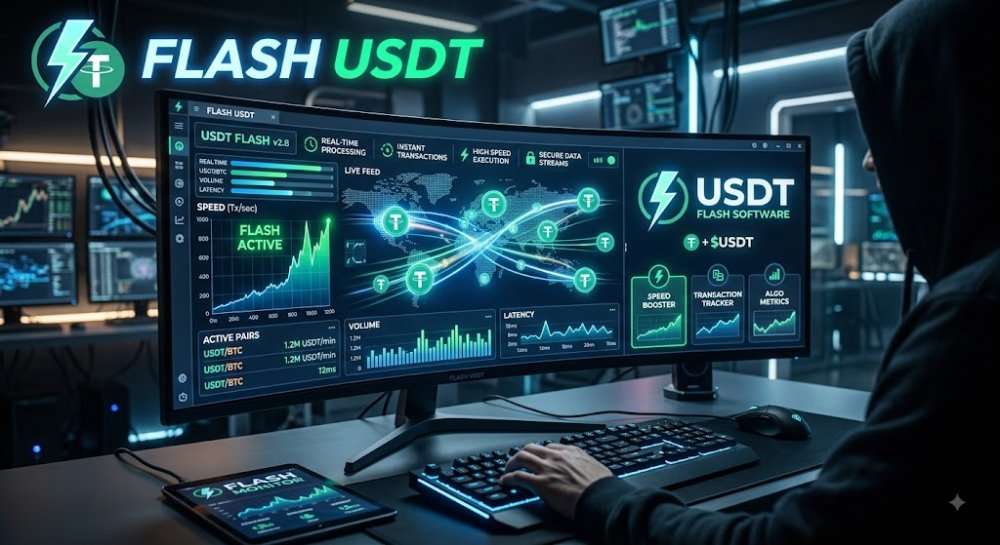
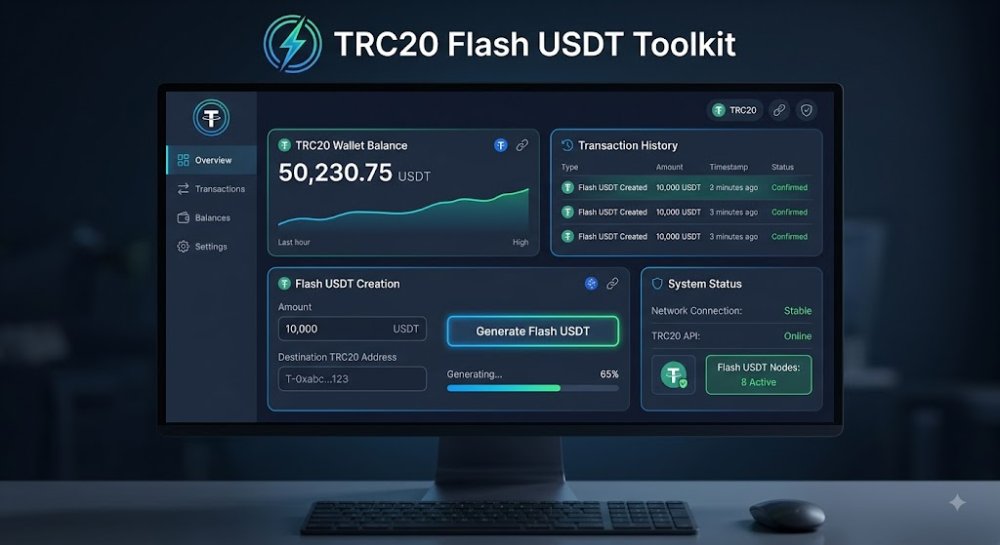
A lot has been written about TRC20 Flash USDT Software, however I am writing to make more clarification on the Subject matter Fake USDT Software as well referenced to Flash USDT App Tool. Contact Cyber-Master on +447577350128 for more details. Firstly, Flash USDT Generator Software is a tool designed to create temporary balances to demonstrate USDT Transactions on major cryptocurrency networks. This it does by sending fake USDT to other wallets. This major transactions operates on TRC20, ERC20, or BEP20 and other networks. TRC20 Flash USDT software, flash Usdt Generator Software, fake USDT generator, flash USDT download, USDT flashing tool, fake tether generator, USDT fake app, fake USDT wallet sender, USDT fake transaction tool, instant USDT Sender, flash USDT full version, flash USDT GitHub, USDT flash script, TRC20 flash USDT, ERC20 flash USDT, flash crypto software, USDT balance generator There are some features this Fake USDT Sender App Tool possess and they are Generate and Send fake/temporary USDT: The software supposedly creates USDT-like tokens that appear in recipients' wallets (e.g., Trust Wallet, Atomic Wallet, Binance, etc.) on networks like TRC20, ERC20, or BEP20. These look like real transactions for a limited time (often advertised as 180 days or similar), after which they "disappear" or become unusable. High daily limits: Fake USDT App Tool versions claim to allow flashing up to $500k or more per day for "testing," trading simulations, P2P deals, betting, or presentations. Instant/low-fee transfers: It mimics real USDT behavior visually but isn't actual blockchain value. Multi-Network Support: Compatible with TRC20 (Tron), ERC20 (Ethereum), and BEP20 (Binance Smart Chain) networks. High Transaction Limits: Some tools claim to support flashing up to $10M–$500M USDT per transaction or daily. User-Friendly Interface: Designed for ease of use, requiring minimal technical knowledge for setup and operation. Longevity: Flashed balances may remain visible for 24 hours to 365 days, depending on the software license. Integration: Supports popular wallets like Trust Wallet, MetaMask, Binance Wallet, and TronLink, with some offering APIs for automated transactions. Security Claims: Many providers advertise SHA-256 encryption and blockchain security protocols. Escrow Services: Some platforms recommend using escrow for secure transactions, particularly for purchasing the software or flashed USDT.
-
USDT is another name for Tether and is the world’s largest stablecoin, a type of cryptocurrency designed to maintain a stable value pegged 1:1 to the US dollar It was launched in 2014, it pioneered the stablecoin concept and remains the dominant one by market share and trading volume Key Features Peg and Backing: One USDT is intended to equal one USD. Tether Limited claims each token is fully backed by reserves (cash, cash equivalents like U.S. Treasuries, and other assets). Reserves are reported to exceed liabilities, with periodic attestations and transparency reports published. This makes it a low-volatility option for trading, hedging, remittances, and DeFi activities, unlike volatile cryptocurrencies like Bitcoin or Ethereum. Purpose: It provides price stability in the volatile crypto market, acting as a "digital dollar" for trading, hedging, remittances, DeFi, and cross-border transfers without traditional banking. Multi-Blockchain Support: USDT is issued natively on numerous blockchains, including Ethereum (ERC-20), Tron (TRC-20), Solana, Algorand, Polygon, Avalanche, and others (around 14+ protocols as of recent data). This enables fast, low-cost transfers across ecosystems and broad compatibility with wallets, exchanges, and dApps. High Liquidity and Adoption: It has massive trading volume (often the highest among cryptos), deep liquidity on exchanges, and integration with merchants, wallets, payment processors, and OTC desks. It's used by hundreds of millions of users worldwide for trading pairs, cross-border payments, and as a "digital dollar. Market Position (as of mid-2026) Market Cap: Approximately $184 billion. Circulating Supply: Around 184 billion USDT. Total Supply: Roughly 189 billion. 24h Trading Volume: Often $50–60 billion, making it one of the most liquid assets in crypto (frequently ranks #3 by market cap overall). It dominates the stablecoin market, handling a huge portion of crypto trading volume Transparency Efforts: Daily reserve and supply data, plus blockchain-level visibility. Tether also reports profits (e.g., significant earnings from U.S. Treasuries and other investments) and has expanded into areas like Bitcoin mining and AI. Other Variants: Beyond USD₮, Tether offers tokens like EUR₮ (euro), MXN₮ (Mexican peso), and XAU₮ (gold-backed). Initiatives like USDT0 aim for unified supply across chains without bridging History Launched in 2014 (originally as Realcoin) by Tether Limited (part of iFinex, which also owns Bitfinex exchange). Grew rapidly with the rise of crypto trading, especially on exchanges needing a USD proxy. Expanded to multiple blockchains for broader utility. Reserves and Transparency Tether publishes reserve reports showing holdings primarily in U.S. Treasuries, cash equivalents, and some other assets (e.g., gold, Bitcoin in smaller portions). As of recent reports, assets exceed liabilities, with net equity in the billions Ease of Use and Utility: Fast, borderless transfers on supported chains (e.g., very low fees on Tron). Supports arbitrage, lending/borrowing in DeFi, and acting as a bridge between fiat and crypto. Available for individuals (trading/hedging), merchants (payments), and exchanges (liquidity) Note on Controversies: USDT has faced significant criticism over its history, including past periods of incomplete 1:1 backing, lack of full audits (using attestations instead), and regulatory fines (e.g., CFTC in 2021 for misleading statements about reserves from 2016–2018; NYAG settlement related to Bitfinex). Transparency has improved with more frequent reporting, but skepticism remains due to its centralized nature and past issues. Advantages High liquidity and widespread acceptance. Fast, cheap transfers (especially on Tron or Solana). Hedge against volatility or local currency devaluation. Earn yields in some DeFi protocols Risks Counterparty/centralization risk (relies on Tether’s management and reserves). Potential de-pegging in extreme market stress (though it has recovered quickly in the past). Regulatory uncertainty in some jurisdictions. Not FDIC-insured or government-backed. For the most current data, check official sources like tether.to (transparency page), CoinMarketCap, or CoinGecko. USDT remains a cornerstone of the crypto ecosystem despite its controversies, powering trillions in cumulative trading volume. Always do your own research (DYOR) and consider risks before using it. Recommended - Flash USDT Generator Software Fake USDT Sender App Tool
-
Flash USDT is a legitimate or standard form of Tether (USDT). It typically refers to fake, temporary, or simulated USDT balances created via specialized software or tools. These appear in wallets (often on TRC20 or similar networks) but lack real blockchain confirmation, value, or permanence—they eventually disappear or prove unspendable Legitimate Context vs. Reality Real USDT (Tether stablecoin) is widely used for its stability (pegged to USD), low fees (especially on TRON/TRC20), speed, and global accessibility. Flash USDT tools are marketed for "testing," "demonstration," "P2P trading," or "casino/gaming" simulations, but they are overwhelmingly linked to scams. Many scammers use them to spoof wallet balances, trick people in P2P deals, or create illusions of funds that vanish For P2P Trading: Simulated instant/large balances (e.g., up to hundreds of thousands visually) to build "trust" during negotiations. Fast visual confirmation to speed up deals on platforms like Binance P2P. Low/no real cost for demonstration (pay a small fee to "flash" large amounts). For Gaming/Casino: Instant "credits" or balance displays for betting platforms, in-game purchases, or advertising. Ability to simulate high-volume deposits/withdrawals for testing or promotions without real capital movement. Perceived speed and seamlessness for user engagement (e.g., quick betting flows) Real Benefits Come from Standard Flash USDT For P2P trading and online casinos, genuine USDT offers: Stability: No volatility — 1 USDT ≈ 1 USD. Speed & Low Fees: TRC20 transfers are very cheap and confirm in seconds/minutes. Global Accessibility: Easy P2P buys/sells and deposits/withdrawals at many casinos/exchanges. Liquidity: High trading volume and acceptance. Privacy/Security Aspects: Pseudonymous, irreversible transactions (good for some users, but irreversible losses too) Major Risks and Warnings Scams: You may "receive" Flash USDT, send real crypto in return, and lose everything when it vanishes. Common in P2P and fake giveaways. No Real Value: majority of the scammers sends fake USDT that cannot be reliably spent, withdrawn, or traded on legitimate platforms. Be careful. Legal Issues: Using/distributing fake assets can lead to fraud accusations. Wallet/Asset Loss: Interacting often involves malicious contracts that drain real funds. Platform Bans: Exchanges and casinos detect and penalize suspicious activity. Strong recommendation: Always stick to Flash USDT. Stick to verified, on-chain real USDT from reputable sources. Always verify token contract addresses on block explorers, use escrow in P2P, and only deposit to trusted casinos. If something promises "flash" large sums cheaply, it's almost certainly a scam.
.thumb.jpg.5c7a8d7c6cf9e5eb0adcbbd914e05d5c.jpg)
-
For stablecoin holders (USDT, USDC, DAI, etc.) in 2026, the best wallets balance multi-chain support (especially low-fee networks like Tron and Solana), security, yield opportunities, ease of use, and fees Stablecoins are primarily used for payments, remittances, DeFi yield, and value storage, so prioritize self-custody ("not your keys, not your coins"), broad chain support, and features like built-in swaps or yield integration. Hardware wallets suit large/long-term holdings; hot wallets (mobile/browser) work better for daily use. Top Recommendations by Use Case 1. Best Overall / Security-Focused: Zengo (Mobile, Keyless MPC) Why it stands out: Uses Multi-Party Computation (MPC) — no single seed phrase to lose or steal. Biometric/email recovery, strong track record (no major hacks), and good multi-chain stablecoin support (including USDT on several networks). Excellent for beginners and businesses Pros: User-friendly, built-in swaps/on-ramps, Web3 firewall against scams, 24/7 support. Tether invested in it. Cons: Slightly narrower chain support than Trust Wallet. Ideal for: Everyday holding, remittances, and users wary of seed phrases 2. Best Multi-Chain / Mobile: Trust Wallet Supports 100+ blockchains, including Tron (key for cheap USDT transfers), Solana, Ethereum/EVM L2s, and BNB Chain. Broad asset support and dApp browser for DeFi. Pros: Free, mobile-first, strong for USDT TRC-20, staking/DeFi access. Cons: Yield options more limited (requires dApp routing); seed phrase management needed. Ideal for: Users active across chains or needing low-fee Tron transfers 3. Best Hardware / Long-Term Cold Storage: Ledger (Nano X, Stax, or Flex) or Tangem Ledger: Industry standard for offline security. Supports thousands of assets across major chains. Pair with Ledger Live for management. Great for large holdings. Tangem: NFC card-based (very portable), supports 16,000+ assets/90+ chains including stablecoins on Ethereum, Solana, Tron. Yield Mode for Aave integration on supported stablecoins; no traditional seed issues in some setups Pros (both): Maximum security for savings; offline signing reduces online risks. Cons: Less convenient for frequent transactions (use with a hot wallet). Cost for hardware. Ideal for: HODLing significant amounts or as a backup 4. Best for Beginners / USDC Focus: Coinbase Wallet (now often Base App) Non-custodial, easy fiat on-ramps, strong Base/EVM + Solana support, gas sponsorship on Base for cheap/free transfers. Seamless with Coinbase exchange Pros: Intuitive, good for new users, USDC rewards potential via exchange link. Cons: Seed phrase required; some fees higher. Ideal for: Newcomers or those wanting simple on/off ramps. 5. Best for DeFi / EVM: MetaMask Dominant for Ethereum and L2s (Base, Arbitrum, etc.). MetaMask Earn for one-tap Aave/Lido yield on stablecoins. Broad dApp integration. Pros: Plugins/extensions, customizable. Cons: Weaker on non-EVM (e.g., no native Tron USDT). Alternatives: Phantom (Solana/USDC focus), Rabby (advanced EVM simulation/safety), OKX Wallet (feature-rich) Key Factors for Stablecoin Holders in 2026 Chain Support: Tron for cheapest USDT sends; Solana for fast/low-fee USDC; EVM L2s (Base, Arbitrum) for DeFi yield. Yield: Look for native integrations (Aave, Morpho, etc.) in wallets like MetaMask, Argent, or Tangem Yield Mode. Idle stablecoins can earn 3-10%+ depending on protocol/rates. Security: Prefer MPC/keyless (Zengo) or hardware for large amounts. Always back up seeds securely if applicable; use 2FA/biometrics. Fees: Network gas + any swap markups. Some support gas paid in stablecoins or sponsorship. Hybrid Approach: Hot wallet (e.g., Trust/Zengo) for spending + hardware for cold storage of most funds. Other notables: Exodus (user-friendly desktop/multi-chain), Phantom (Solana), Safe/Argent (smart accounts for advanced users). Quick Tips Start small: Test transfers and recovery with minimal amounts. Enable yield where possible for idle funds. Avoid custodial exchange wallets for large holdings due to counterparty risk. Stay updated: Check official sites/apps for the latest chain/yield support, as the space evolves quickly. Research current fees, supported networks, and reviews before choosing, and consider your primary needs (mobile vs. security, daily use vs. storage). Always DYOR and never share seeds/private keys.
.thumb.jpg.1cde30b3f251de1351d51aed6bfa24b8.jpg)
-
Flash USDT Generator Software is a programmed tool or apps also software that can "generate" or "send" large amounts of fake USDT (Tether stablecoin) to wallets. These supposedly create temporary, visible balances that appear real for a short time (e.g., hours to months) before vanishing or proving worthless. Keywords : flash USDT software, fake USDT generator software, USDT flash generator, flash USDT download, USDT flashing tool, flash tether generator, USDT flash app, flash USDT wallet sender, USDT fake transaction tool, instant USDT Sender, flash USDT full version, flash USDT GitHub, USDT flash script, TRC20 flash USDT, ERC20 flash USDT, flash crypto software, USDT balance generator To contact Latest Version developer, Chat +447577350128 What Flash USDT Software Does A "fake USDT sender" or "USDT flashing tool" for simulating transactions. Used for pranks (e.g., sending fake money to family/friends), testing, P2P negotiations, trading demos, or showing liquidity. Capable of generating/sending amounts like $1K to $500K+ USDT on networks like TRC20 (Tron), ERC20, or others. In addition, The coin is tradable/swappable in simulations (for demos), splitable amounts, anonymous operation claims, and user-friendly interfaces for PC/mobile. It can also be used for testing wallets/apps, blockchain education, demoing balances for presentations, advertising, betting/casino platforms, or P2P negotiations (visual proof only). NB : I created this software for legal purposes, to test run new creations and prank family and friends. This is a tool for local blockchain simulations, testnets, or demo apps (e.g., generating mock transactions for code testing). These are not for mainnet use or personal gain Risk Management This app or software does not pose any problem, risk to the users. Most users are crypto enthusiasts who have gone Series of cryptocurrency trainings.
.thumb.jpg.e26256364c6e5505eea42a949003a3a5.jpg)
-
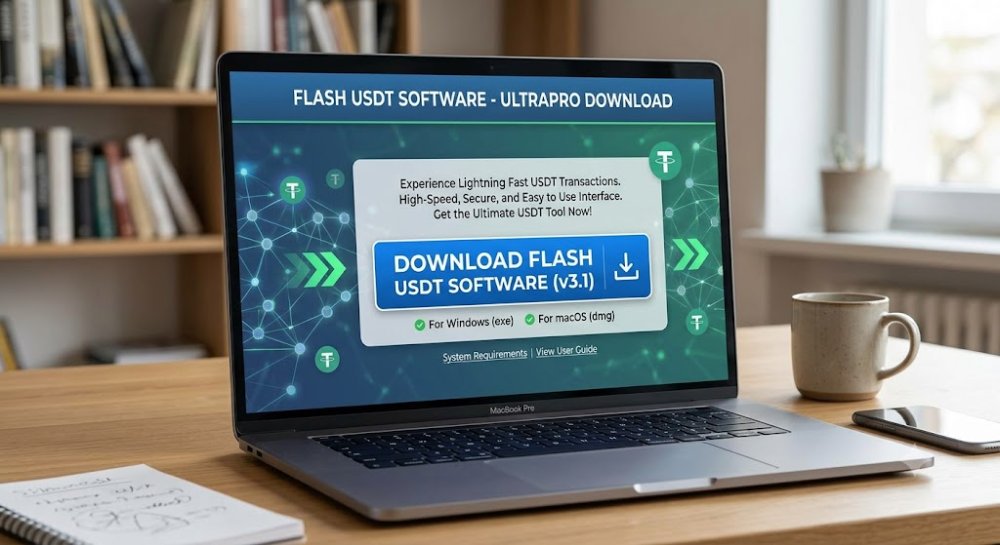
Flash USDT Software is a tool designed to create temporary, simulated Tether (USDT) balances on blockchain networks like TRC20, ERC20, or BEP20. Contact Cyber-Master at +447577350128 These tools are often marketed as solutions for cryptocurrency traders, developers, or businesses to simulate large USDT transactions for purposes such as proof-of-funds demonstrations, testing blockchain applications, or facilitating peer-to-peer (P2P) trading scenarios. However, the legitimacy and ethical use of such tools are highly controversial, as they can also be exploited for fraudulent activities. Follow up with the opportunity to generate Flash USDT for educational purposes Searches : flash USDT software, fake USDT generator software, USDT flash generator, flash USDT download, USDT flashing tool, flash tether generator, USDT flash app, flash USDT wallet sender, USDT fake transaction tool, instant USDT Sender, flash USDT full version, flash USDT GitHub, USDT flash script, TRC20 flash USDT, ERC20 flash USDT, flash crypto software, USDT balance generator What is USDT Flashing?USDT flashing refers to the process of generating temporary USDT balances that appear in wallets and on blockchain explorers, mimicking real Tether transactions. These "flash" tokens are typically: Temporary: Balances may last from a few hours to up to 365 days, depending on the software and license. It's swappable: Flash USDT can be swapped or sold on centralized exchanges because of higher unlimited liquidation or valid transaction signatures. Transferable: These tokens can often be moved between wallets (e.g., Trust Wallet, MetaMask, Binance Wallet) but may not be usable for real-world transactions on centralized platforms. Visible on Blockchain: Transactions are logged with verifiable hashes, making them appear legitimate on blockchain explorers. Key Features of USDT Flasher SoftwareBased on available information, USDT Flasher Software typically offers: Multi-Network Support: Compatible with TRC20 (Tron), ERC20 (Ethereum), and BEP20 (Binance Smart Chain) networks. High Transaction Limits: Some tools claim to support flashing up to $10M–$500M USDT per transaction or daily. User-Friendly Interface: Designed for ease of use, requiring minimal technical knowledge for setup and operation. Longevity: Flashed balances may remain visible for 24 hours to 365 days, depending on the software license. Integration: Supports popular wallets like Trust Wallet, MetaMask, Binance Wallet, and TronLink, with some offering APIs for automated transactions. Security Claims: Many providers advertise SHA-256 encryption and blockchain security protocols. Escrow Services: Some platforms recommend using escrow for secure transactions, particularly for purchasing the software or flashed USDT. Common Use CasesThe software is marketed for: P2P Trading: Simulating large USDT balances for peer-to-peer deals or escrow services. Proof-of-Funds: Displaying temporary balances to demonstrate financial capacity without locking real funds. Blockchain Testing: Developers use it to simulate transactions for testing decentralized applications (dApps) or smart contracts. Educational Purposes: Demonstrating wallet flows or transaction mechanics without risking real funds Lastly, the use of Flash USDT Generator Software has proven to be true by our customers who has tested and verified the efficiency of software.
-
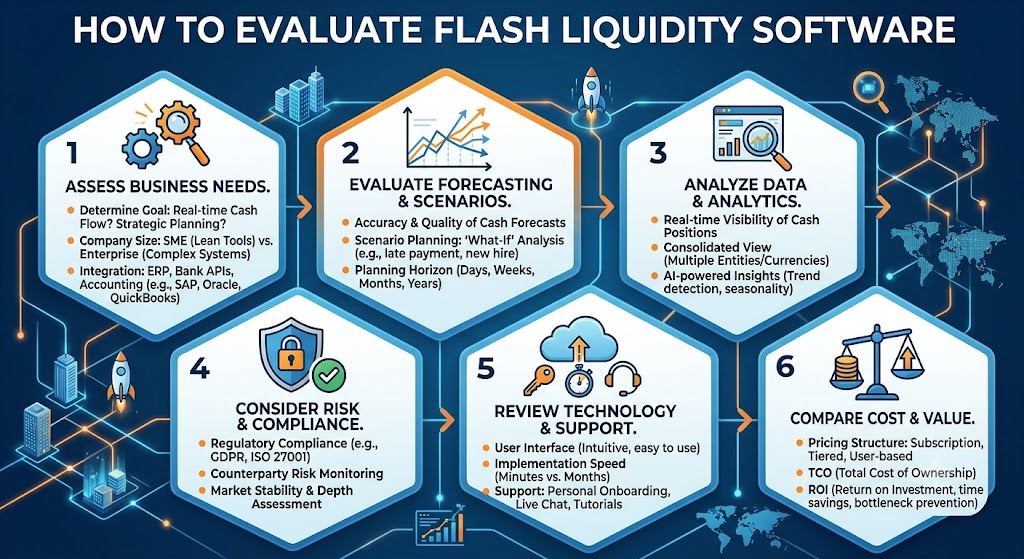
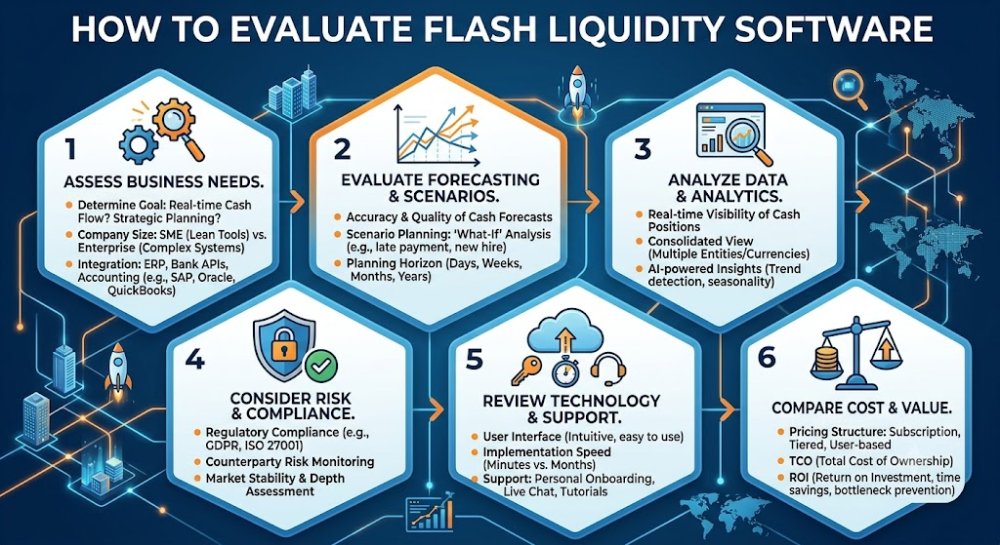
Evaluating flash liquidity software (or liquidity tech/bridges that enable high-speed, on-demand, or temporary liquidity provision) requires assessing technical performance, capital efficiency, risk controls, reliability, and economic alignment. The term often appears in broker FX/crypto liquidity bridges, DeFi protocols (e.g., FlashLiquidity self-balancing pools, Flash Trade’s FLP pools on Solana, or Radix’s hybrid off-ledger/on-chain Flash Liquidity), and related market-making or arbitrage systems. No single product is universally “best”—evaluation depends on your use case (broker aggregation, DeFi LP/trading, market making, or institutional execution). Use a structured checklist combining quantitative metrics and qualitative due diligence. 1. Liquidity Sourcing, Depth, and Pricing Quality Number and quality of liquidity providers (tier-1 banks, non-bank MMs, or on-chain pools). Narrow feeds create concentration risk when one provider widens spreads or withdraw Aggregated book quality: Does displayed depth hold under real size? Measure executable depth at key levels (e.g., within 0.5–2% of mid) and price impact/slippage for representative order sizes. Pricing transparency: All-in spreads, last-look windows/hold times, reject rates, and whether quotes are firm. Prefer systems that report these clearly. In DeFi contexts (e.g., pool-to-peer models like Flash Trade FLP): Utilization risk (LPs effectively take the other side of trades), fee sources (open/close, margin, swaps, liquidations), and balance incentives that discourage heavy imbalance Test: Request live or historical quotes at your typical and peak ticket sizes across market conditions (including low-liquidity periods). Compare effective spread and implementation shortfall, not just top-of-book. 2. Order Routing, Execution Logic, and Pre-Trade Controls Smart routing rules: Are they transparent and overridable? Opaque logic makes best-execution claims hard to verify Pre-trade risk: Gross/net exposure limits, margin/credit checks, and clear behavior on limit breaches (rejects vs. requotes). In intent-based or hybrid systems (e.g., Radix Flash Liquidity with Subintents): Matching quality, time bounds on pre-authorizations, and how solvers construct final on-chain transactions. Capital efficiency is a key selling point—market makers express liquidity off-ledger and settle only when matched Test: Paper-trade or micro-pilot representative order flows; log fill rates, rejections, and slippage by venue/time of day. 3. Performance, Latency, and Resilience Round-trip latency targets (measurable, not just averages—include tails). Extra milliseconds compound into slippage in fast markets. Failover: Automatic across data centers or nodes; recovery time and testing frequency. Uptime/SLA history and behavior under stress (volatility spikes, oracle issues, network congestion). For on-chain/DeFi: Oracle reliability (primary + backup), circuit breakers, and execution latency (e.g., sub-50 ms claims on high-speed layers). Test: Stress scenarios and historical recovery data. Monitor real-time microstructure signals if the software provides analytics (liquidity gaps, imbalance, toxic flow). 4. Connectivity, Integration, and Platform Coverage Supported protocols (FIX, REST, WebSocket) and native connectors for your platforms (MT5, specific DEXs/CEXs, wallets, or OMS/EMS). Third-party plugins often break. API quality: Rate limits, sandbox availability, documentation, and ease of programmatic use. Multi-venue/cross-chain support and settlement speed/rails (especially important for stablecoin or multi-asset corridors). Risk Management, Security, Oversight, and Economics Risk & security: Independent audits (smart contracts or controls), penetration testing, credential encryption, and audit trails for every quote/order with exportable timestamps. Reporting: Real-time dashboards for fill quality, LP performance, spreads, depth, and best-execution evidence. Economics: Fee model (spreads, commissions, performance-linked vs. fixed), capital requirements/lock-up, yield sources for LPs, and total cost of ownership (including hidden latency or reject costs). Resilience metrics: Time-to-recover after shocks, turnover/velocity of liquidity, and funding costs under stress. Track record: Historical performance data, client references, and independent metrics (spread tightening, volume share, recovery times). For DeFi, examine TVL trends, actual vs. advertised APRs (including trader PnL effects), and smart-contract risk history. Recommended - Flash USDT Software Installation Guide and Instructions Due diligence steps: Shortlist 3–5 candidates via referrals and public metrics. Request full documentation, live demos, API/sandbox access, and (where possible) token loans or test capital. Run controlled pilots with your real flow sizes and corridors. Negotiate SLAs, transparency clauses, and milestone-based or performance-linked terms. Review legal/compliance alignment (especially for regulated brokers or institutional use). Additional Context-Specific Considerations Broker/FX liquidity bridges: Emphasize the five checks above—sourcing, routing, connectivity, performance, and oversight—to control hidden costs. DeFi protocols (FlashLiquidity-style or FLP): Focus on automated arbitrage distribution to LPs, self-balancing mechanics, oracle robustness, and utilization/impermanent-loss-style risks. Verify on-chain transparency and historical fee accrual. Hybrid systems (e.g., Radix Flash Liquidity): Capital efficiency for professional market makers (off-ledger expression + on-demand settlement via mechanisms like Instamint) is central; evaluate solver incentives, credit/vetting processes, and settlement finality. General market liquidity assessment: Complement software evaluation with classic metrics—bid-ask spread (width), depth, resilience, and actual execution costs rather than quoted spreads alone. Start with clear requirements (asset classes, ticket sizes, latency needs, regulatory constraints, capital efficiency goals). Quantitative pilots beat marketing claims. Conditions change rapidly in crypto and high-speed markets, so continuous monitoring post-deployment is essential. If you specify the exact product, use case (e.g., broker bridge, Solana FLP, Radix system), or chain, a more targeted evaluation is possible.
-
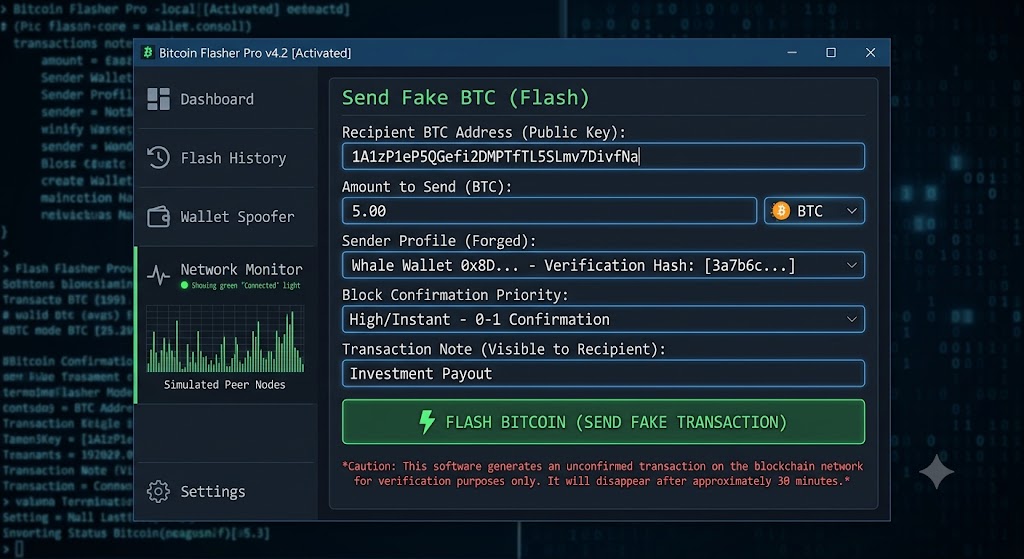
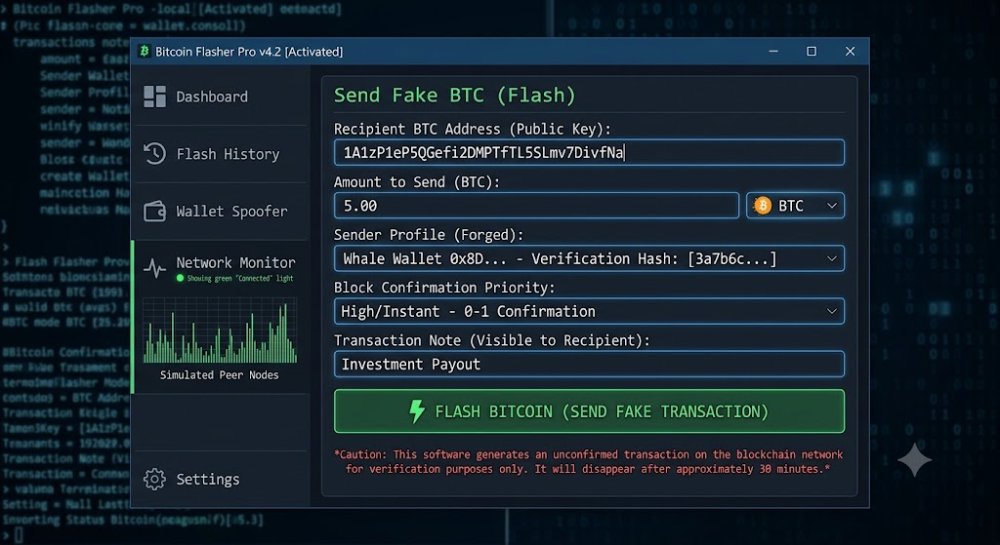
Fake BTC sender software" (often known as "BTC Flash," "Bitcoin Flash Sender," or "Fake Transaction Tool") refers to applications that claim to broadcast unconfirmed or simulated Bitcoin transactions to a recipient's wallet. Contact Cyber-Master at +447577350128 for more information Flash BTC Software, fake BTC sender software, Bitcoin Software Sender, fake btc sender App Tool, fake btc sender, flash btc tool, bitcoin sender software, unconfirmed btc generator, double spend software btc, flash btc transaction app, bitcoin miner crack, btc private key finder, bitcoin balance adder, btc hack tool download, bitcoin multiplier software, free btc cloud mining app, bitcoin mining simulator apk, auto btc cloud miner, instant withdraw btc miner, Electrum XMR fork, cracked wallet restore tool, fake bluewallet setup, seed phrase recovery generator, Fake Bitcoin Sender Software, Fake BTC Transaction Tool, Fake Bitcoin Sender Software, Flash Bitcoin Sender Tool, How To Send Fake BTC Transaction, Fake Bitcoin Generator Software, Send Fake Bitcoin To Family, Bitcoin Flash Sender App, Bitcoin Fake Sender Tool These tools are overwhelmingly associated with financial improvements seamlessly. Features of Fake BTC Sender SoftwareCan send maximum 1-150BTC Appear as real, confirmed deposits in any wallet (Trust Wallet, Coinbase, Binance, Blockchain.com, hardware wallets, etc.) Show up with valid-looking TXIDs on block explorers Stay visible and “confirmed” for days, weeks, or even months (commonly claimed 90–600 days) Can sometimes be transferred or spent within limits Require no real Bitcoin from the sender How Fake BTC Sender Tool WorksFake BTC sender software broadcasts a valid-looking transaction to the Bitcoin network that appears in the recipient's wallet as "Pending" or "0 Confirmations" before disappearing later (a technique often incorrectly described as double-spending). It's easy and fast to Send Fake Unconfirmed bitcoin transactions to any bitcoin address, with a help of innovative software that uses the double expense method to send fake bitcoin transactions, The bitcoin sent by this is a fake transactions The transaction remains in wallet in days You will have a hash id after the transaction The balance of the receiver will update a few second after sending the Bitcoin.
-
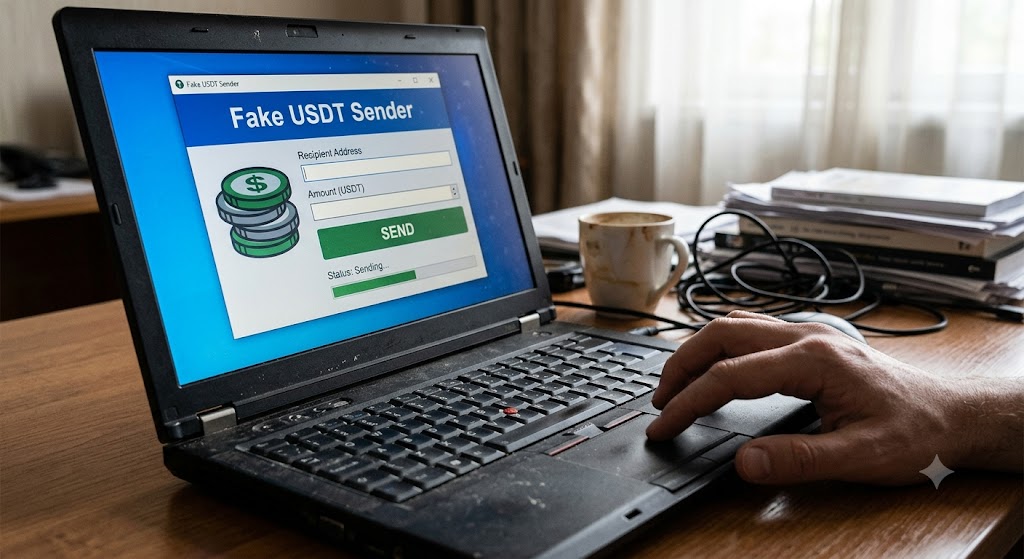
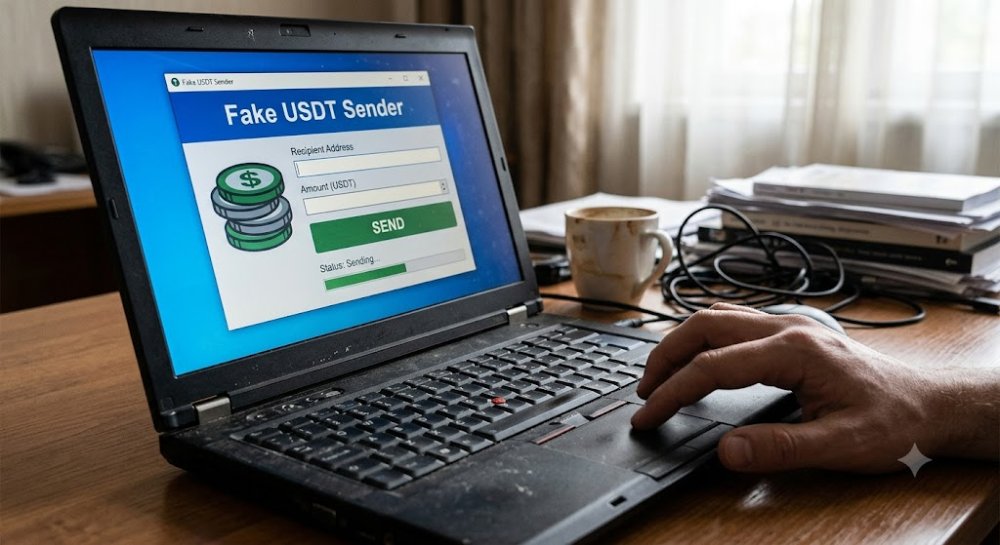
As a crypto enthusiast, you have to understand what fake USDT Sender software is all about, how it operates and the best way to install it properly. Fake USDT software Flash usdt generator tool Fake USDT Sender Software fake USDT transaction software Fake USDT software tool How to send latest fake USDT Transactions software Latest Fake USDT Tether sender software fake Tether sender software Tether Fake Sender Tool What is Fake USDT SoftwareFake USDT Software also termed Flash USDT Sender Software is a programmed software that creates and generates flash USDT in large quantities and send to traders in ERC-20, TRC-20, and BEP-20 format and other networks. In order words, Fake USDT Sender App Tool simulates large USDT balances for peer-to-peer deals or escrow services. Contact : +447577350128 What are the Features of Fake USDT Generator Software The Fake USDT software boasts several notable features: Transferrable: Users can easily move their assets as needed. Splitable: The software allows for easy division of assets. Swappable: Users can exchange assets effortlessly. Flash Duration Control: Users have the ability to control the timing of their transactions. Additional Details are as follows : Multi-Network Support: Compatible with TRC20 (Tron), ERC20 (Ethereum), and BEP20 (Binance Smart Chain) networks. High Transaction Limits: Some tools claim to support flashing up to $10M–$500M USDT per transaction or daily. User-Friendly Interface: Designed for ease of use, requiring minimal technical knowledge for setup and operation. Longevity: Flashed balances may remain visible for 24 hours to 365 days, depending on the software license. Integration: Supports popular wallets like Trust Wallet, MetaMask, Binance Wallet, and TronLink, with some offering APIs for automated transactions. Security Claims: Many providers advertise SHA-256 encryption and blockchain security protocols. Escrow Services: Some platforms recommend using escrow for secure transactions, particularly for purchasing the software or flashed USDT.
-
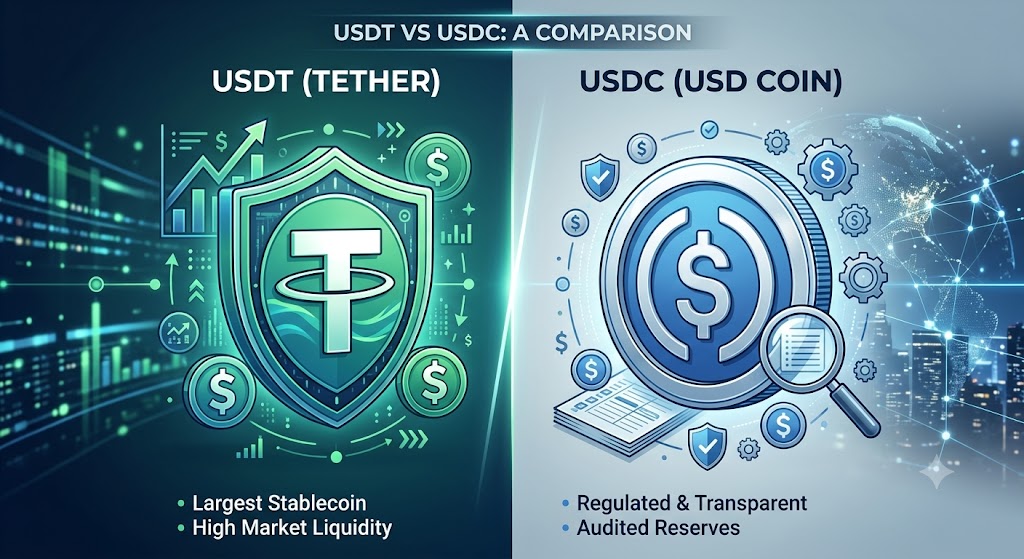
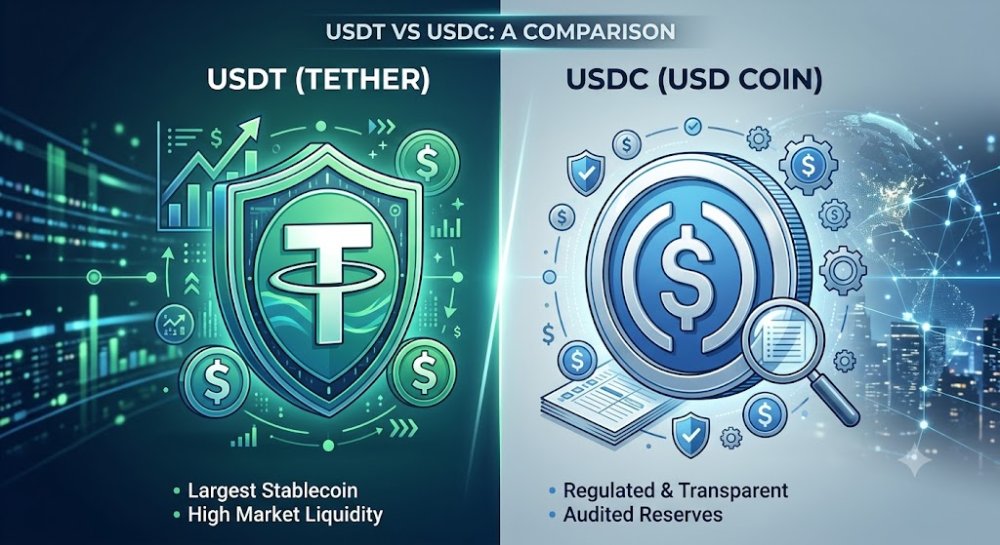
USDT (Tether) and USDC (USD Coin) performs similar actions serving the same purpose in the Cryptocurrency World. However, USDT is the Senior of USD pertaining to the history of the two largest stablecoin. USDT (Tether) and USDC (USD Coin) are the two largest fiat-backed stablecoins, both designed to maintain a 1:1 peg to the US dollar. They serve as key infrastructure in crypto for trading, payments, remittances, DeFi, and treasury management Market Position (as of mid-2026) USDT: Dominant leader with ~$184 billion in circulation (around 59% of the total stablecoin market). It has unmatched liquidity and trading volume. USDC: Second place with ~$73–74 billion in circulation. It has grown in institutional and regulated use cases but trails significantly in overall market share and daily volumes. USDT benefits from first-mover advantage (launched 2014) and broad availability, while USDC (launched 2018) positions itself as the more compliant, transparent alternative. Issuers and Regulation USDT: Issued by Tether Limited (affiliated with Bitfinex). Headquartered in El Salvador (previously British Virgin Islands). It operates with less direct US regulatory oversight and has faced historical scrutiny, fines, and investigations (e.g., from the NY AG) over past reserve claims and transparency. It is strengthening compliance, including US-regulated versions like USA₮. USDC: Issued by Circle Internet Financial (in partnership with Coinbase via the former Centre Consortium). US-based with strong regulatory licenses (e.g., NY, New Hampshire money transmitter licenses). It aligns closely with US regulations, MiCA in the EU, and institutional standards. Circle files with the SEC and emphasizes compliance Key takeaway: USDC is generally viewed as lower regulatory and compliance risk, especially for institutions and businesses in regulated jurisdictions. USDT excels in less-regulated or emerging markets. Reserves and Transparency Both claim 1:1 backing and over-collateralization with surpluses, but their approaches differ: USDC: Backed by highly liquid assets: cash (at major banks), short-term US Treasuries, and overnight reverse repos. Managed partly via the Circle Reserve Fund (USDXX), an SEC-registered money market fund by BlackRock. High transparency: Weekly disclosures, monthly attestations by Big Four firm (Deloitte), detailed breakdowns, and public SEC filings. Reserves consistently match or exceed circulation USDT: Mix of US Treasuries (majority), cash/cash equivalents, secured loans, Bitcoin, gold, and other investments. Improved but still debated transparency: Quarterly attestations (e.g., by BDO), daily circulation reports, and recent moves toward a full Big Four audit. Reserves show surpluses (e.g., billions over liabilities), with heavy Treasury allocation. Past issues included commercial paper exposure (now eliminated) and less granular real-time detail Key takeaway: USDC offers superior, more frequent, and verifiable transparency. USDT has made significant progress and holds substantial reserves, but its diversified (and sometimes less liquid) assets plus offshore structure lead to ongoing skepticism from some observers Liquidity, Adoption, and Use Cases USDT: Superior liquidity, deeper order books, and more trading pairs on centralized exchanges (CEXs). Dominant on Tron (low fees) and widely used in emerging markets, DeFi, and high-volume trading. Preferred for arbitrage, speculation, and global accessibility USDC: Strong in regulated ecosystems, institutional integrations (e.g., Visa, Mastercard, BlackRock), payments, treasury, and on-chain apps on Ethereum, Base, Solana. Better for businesses needing audit trails and compliance. Both are redeemable 1:1 (with conditions), multi-chain, and highly liquid overall, but USDT wins on raw volume and breadth. Risks and Stability Depegging history: USDC experienced a brief depeg during the 2023 SVB crisis (quickly resolved). USDT has faced multiple depeg episodes historically but maintained the peg through stress. Counterparty/Issuer Risk: USDC benefits from US regulation and conservative reserves. USDT carries more perceived credit and operational risk due to its history and asset mix, though it has demonstrated resilience. Censorship/Blocking: USDC (regulated issuer) may face more freezing/blacklisting risks in compliance scenarios. USDT is harder to censor in some contexts. Both have proven stable in normal conditions, with reserves designed for redemptions. Which Should You Use? Choose USDT for maximum liquidity, trading, emerging markets, low-fee chains (e.g., Tron), and broad exchange support. Choose USDC for regulatory compliance, institutional needs, transparency, payments, or US/EU-focused operations. Many users and institutions hold both for diversification. Both are far more stable than volatile cryptocurrencies, but neither is risk-free—always verify current reserves on official sites (tether.to/transparency and circle.com/transparency), use reputable platforms, and consider your jurisdiction's rules. Data evolves quickly; check live sources like DefiLlama for the latest market stats
-
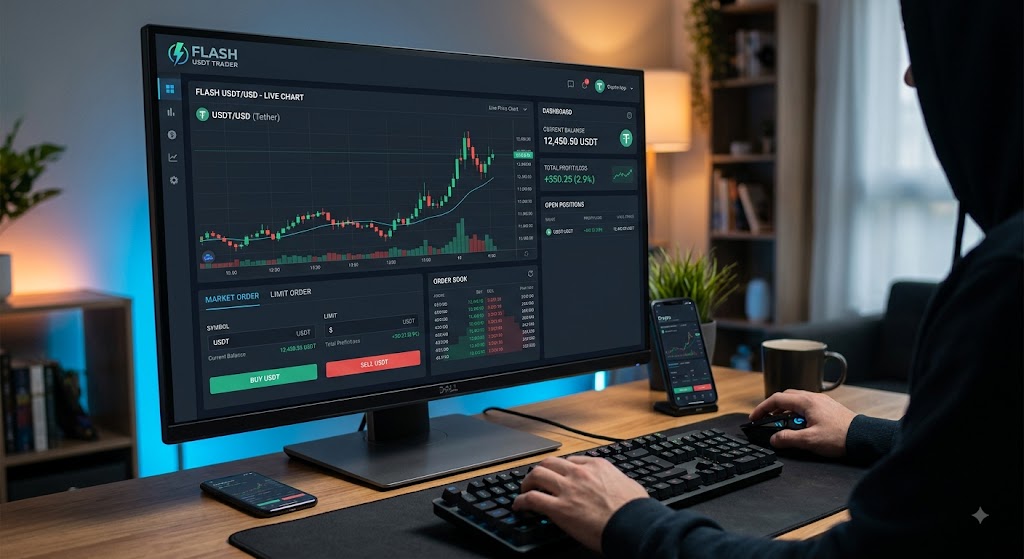 This page is dedicated to Cryptocurrency enthusiasts who steadily trade Bitcoin, Etherum, USDT (Tether), solana and other coins. In this forum, we sell reliable Flash USDT Software to customers. Also, this forum educates learners, new traders, how these programs operate, the requirements looking at the technical reality, the associated risks, and legitimate alternatives. All our flash USDT Software are compatible with various cryptocurrency networks like TRC20, ERC20, or BEP20 and other networks. If you have any questions, relate with us at cybermastercrypto@gmail.com Or Contact us at +447577350128
 -
Welcome to Pages! Pages extends your site with custom content management designed especially for communities. Create brand new sections of your community using features like blocks, databases and articles, pulling in data from other areas of your community. Create custom pages in your community using our drag'n'drop, WYSIWYG editor. Build blocks that pull in all kinds of data from throughout your community to create dynamic pages, or use one of the ready-made widgets we include with the Invision Community. View our Pages documentation
.jpg.06a1a273a0082fef46241eaacb421ab6.jpg)
.jpg.0a2b51ef7ea431f44fbf586f1e228b55.jpg)
.jpg.a3d2986b9dd6abe87af48d6061661e94.jpg)